Kandinsky SR 2.0: Image and Video Upscaling in ComfyUI
Kandinsky Lab's SR 2.0 upscales images x2/x4 and video x2/x2.25/x4. Video runs in ComfyUI through official nodes, and images go up to 8K.
kandinsky6-sr, with model files downloaded from inside the bundled workflow.
The official SR 2.0 promo.
Two models, one brand
| ImageSR 2.0 | Video SR 2.0 | |
|---|---|---|
| Scale | x2, x4 | x2, x2.25, x4 |
| Input | any image size, 1024 px output tiles | clips up to 15 s (361 frames at 24 fps) |
| Sampling | single step, creativity level 0–8 | 2-step distilled π-Flow |
| ComfyUI | community nodes only | official kandinsky6-sr node pack |
Video SR 2.0 is the follow-up to the upscaler that shipped with Kandinsky 6.0 on October 6. It produces more natural detail and a cleaner x4 pass (768×512 to 3072×2048), and it now handles clips longer than the 5 seconds it was trained on.
Image upscaling up to 8K
ImageSR 2.0 uses a single set of transformer weights for both x2 and x4. The text tower and all 50 cross-attention layers are replaced by small per-timestep tables, so there is no prompt to write: the model only has the input image and a creativity level.
The model works on 1024-pixel output tiles and blends overlaps with Hann windows, so memory stays flat as the source grows. Timings below are the official H100 measurements, bfloat16, one image at a time:
| Input | Scale | Output | Tiles | Time |
|---|---|---|---|---|
| 1024² | x2 | 2048² | 3×3 | 2.78 s |
| 1024² | x4 | 4096² | 5×5 | 7.80 s |
| 2048² | x2 | 4096² | 5×5 | 7.84 s |
| 2048² | x4 | 8192² | 11×11 | 37.5 s |
Weights are a 10.3 GB transformer (three shards) plus a 168 MB VAE. The release is Diffusers-only: KandinskyImageSRPipeline from kandinskylab/kandinsky-image-sr, plus a demo Space. For ComfyUI, the third-party ComfyUI-KandinskySR node pack covers both the image and the video model and adds int8 ConvRot files.
Video upscaling keeps the audio
Video SR 2.0 encodes the clip once with the KVAE video tokenizer, upscales the latent with a learned upscaler, then denoises each tile with the SR DiT in two steps and decodes it back. Tiles are stitched with the same Hann blending as the image model, and the source audio is carried through.
On an H100, a 768×512 five-second clip takes 41 s at x2 (1536×1024, 9 tiles) and 118 s at x4 (3072×2048, 25 tiles). The x4 pass is where 2.0 improves most over the previous checkpoint:
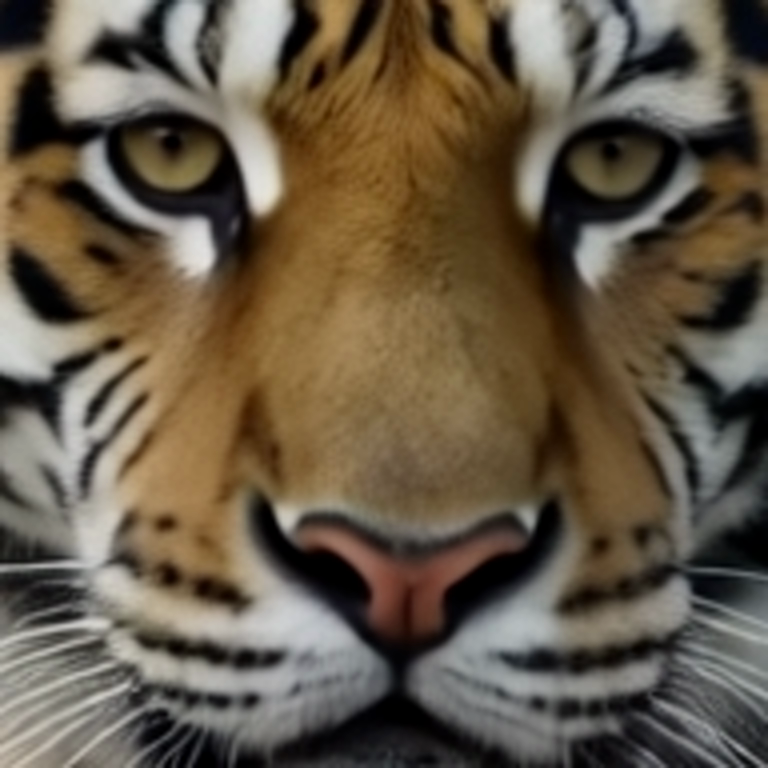 | 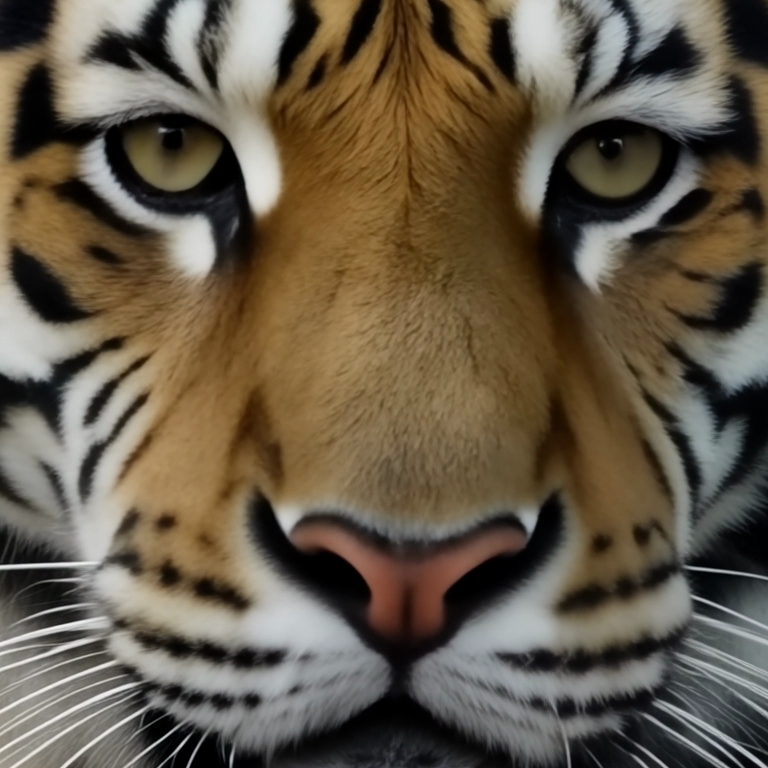 |
|---|---|
| Reference crop, bicubic x4 | Same crop after VSR 2.0 x4 |
Running it in ComfyUI
Install kandinsky6-sr from ComfyUI Manager, restart, open the bundled Kandinsky 6.0 Video Super Resolution template, and use Download models in its setup note. Everything lands in models/diffusion_models/Kandinsky-6.0-VSR-2.0-distilled2steps-Diffusers/, and no generation model, text encoder or audio VAE is needed for standalone SR.
The node pack needs ComfyUI 0.8.0+ and PyTorch 2.8+. NABLA sparse attention is off by default; SageAttention via --use-sage-attention is the simpler speedup.
Comments
Sign in with GitHub to join the discussion.