NVIDIA Nemotron-Labs-Image 30B-A3B: Pixel as Code Image Model
NVIDIA released a 30B-parameter autoregressive image model with 3B active per token, a new 196K-vector visual tokenizer, and weights on Hugging Face.
NVIDIA published Nemotron-Labs-Image-30B-A3B on November 24: a 30B-parameter autoregressive image model that activates 3B parameters per token, plus a bundled visual tokenizer. Weights, model code and a reference inference script ship together in the Hugging Face repository, and the model is the raster-image component of a larger agentic creation framework described in arXiv 2611.31358.
It is a text-to-image model, not a diffusion one: images are written as discrete visual tokens and decoded by a separate 642M-parameter tokenizer. That design is what the paper calls Pixel as Code, where appearance lives in learned tokens and structure (SVG, HTML, chart code) stays editable.
How it generates
The generator is initialized from Nemotron 3 Nano, keeps a 262,144-token context, and was mid-trained progressively and then tuned with GRPO for prompt alignment and image quality. The tokenizer splits images into 16×16 patches and quantizes each to a fixed codebook of 196,560 Leech-lattice vectors, so any width and height that are multiples of 16 are supported.
| Component | Detail |
|---|---|
| Generator | 30B total / 3B active per token, bfloat16 |
| Tokenizer | ~642M parameters, 16×16 patches, 196,560-vector codebook |
| Recommended sizes | 1024×1024, 1184×880, 1248×832, 880×1184 |
| Token budget | 4,352 generated tokens per image, temperature 0.9 |
NVIDIA measures the tokenizer at 41.30 ms to encode and 37.10 ms to decode an image on an A100 at batch size one, against 294.53 ms and 405.46 ms for the Emu3.5 IBQ baseline, and reports higher reconstruction PSNR (29.57 dB vs 26.08 dB) on the same 178K-image set.
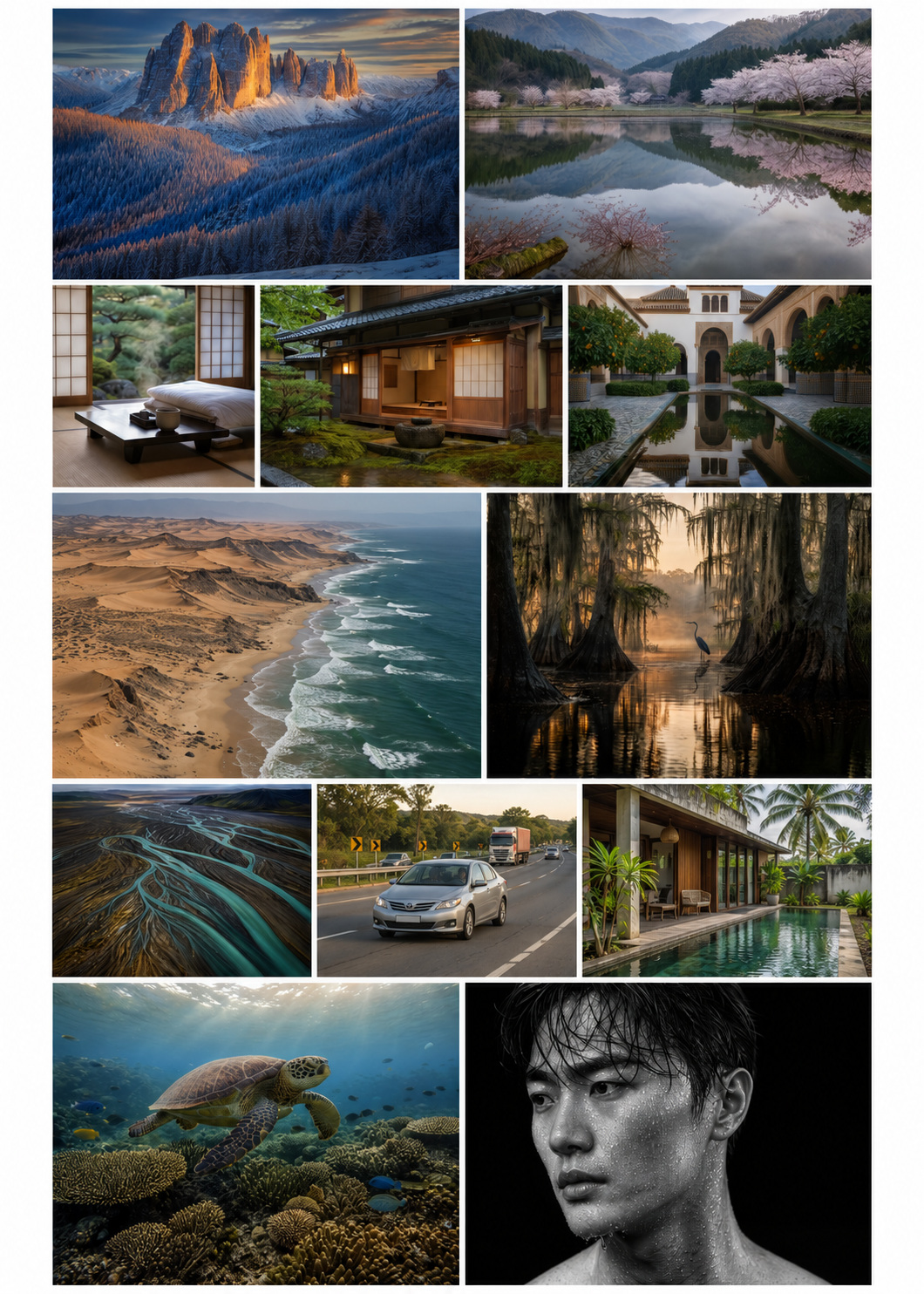
Figure 3 from the technical report: landscapes, architecture, wildlife and portraits.
Benchmarks
The model is strong on composition-following and text rendering, and behind on the newer GenEval2 and Qwen-Image-Bench suites.
| Benchmark ↑ | Nemotron-Labs-VisualCreation | GPT Image 2 | Nano Banana Pro |
|---|---|---|---|
| GenEval | 92.86 | 89.00 | — |
| GenEval2 | 65.43 | 81.00 | 59.00 |
| WISE Verified | 91.50 | — | 87.60 |
| LongTextBench | 97.98 | 96.00 | 97.60 |
| CVTG-2K | 92.53 | 90.03 | 77.90 |
| OneIG | 54.63 | 51.60 | 58.30 |
| Qwen-Image-Bench | 52.46 | 65.23 | 59.33 |
| BizGenEval | 86.0 | 83.2 | 76.7 |
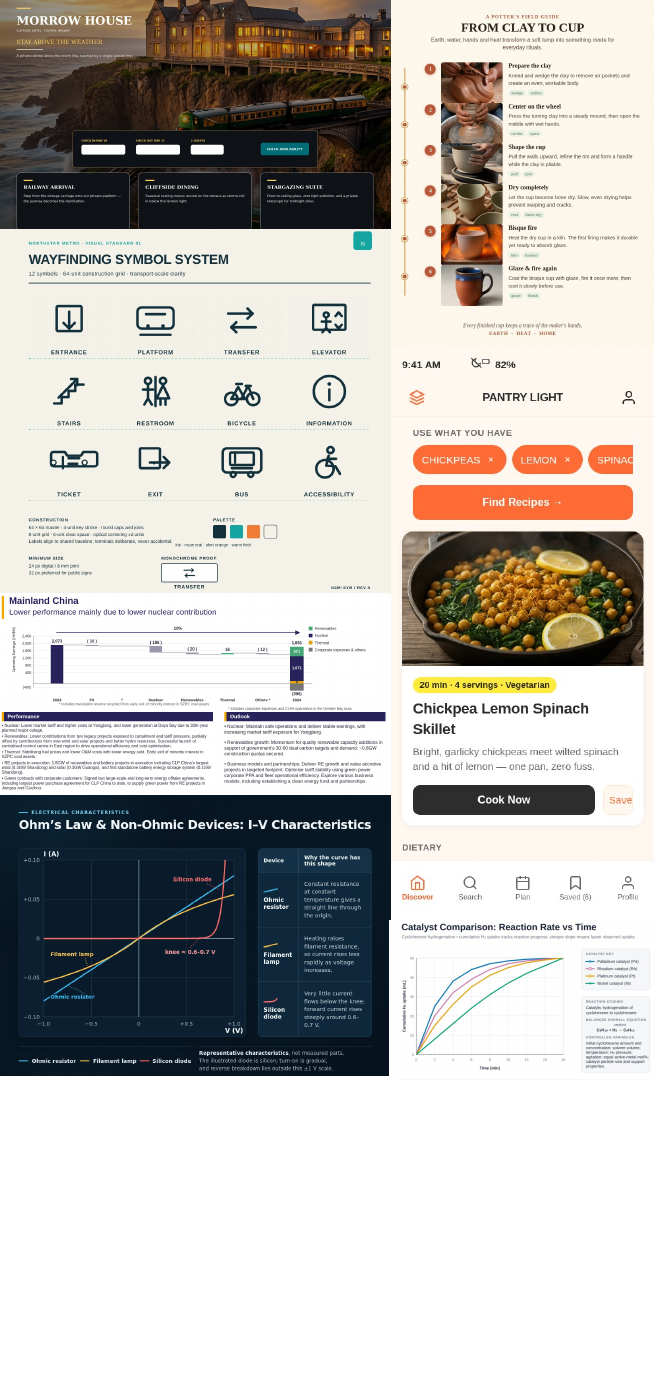
Figure 4: webpages, icons, presentations, charts and scientific figures produced through the framework's structured route.
Availability
The release covers only the image generator and its tokenizer. The VisualCreation harness and the VisionCode models are listed as pending legal clearance, so the routing, browser rendering and repair loop described in the paper are not in this download.
There is no ComfyUI support yet: no native nodes, no Comfy-Org repack, no custom node in the registry. Running it today means the reference path with transformers and vLLM, where the example script assumes four H100 80GB GPUs (tensor_parallel_size=4) and loads 32 safetensors shards from a local directory.
# from the official README: change WIDTH / HEIGHT for other aspect ratios
WIDTH = 1184
HEIGHT = 880
Text prompts work best as explicit descriptions of color, quantity, text, shape, size, texture and spatial relations, which is the system prompt NVIDIA ships with the model.
Comments
Sign in with GitHub to join the discussion.