BluePixel-Turbo: vivo's 4-Step Native 4K Image Editor
vivo open-sources BluePixel-Turbo, a FLUX.2 Klein editor with a DCAE-F64 VAE that edits at native 4K in 4 steps, with a community ComfyUI node pack.
 |  |
|---|---|
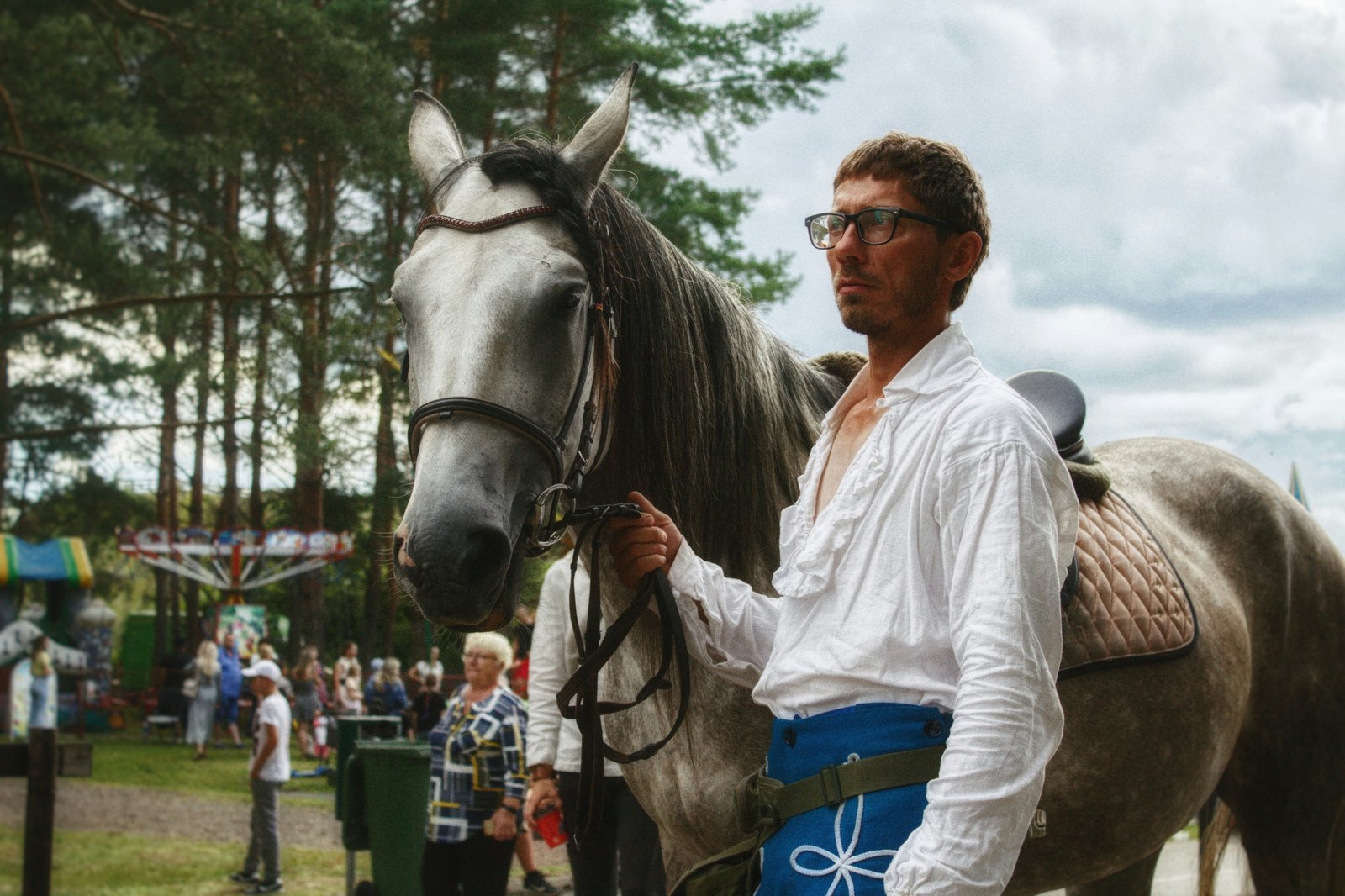
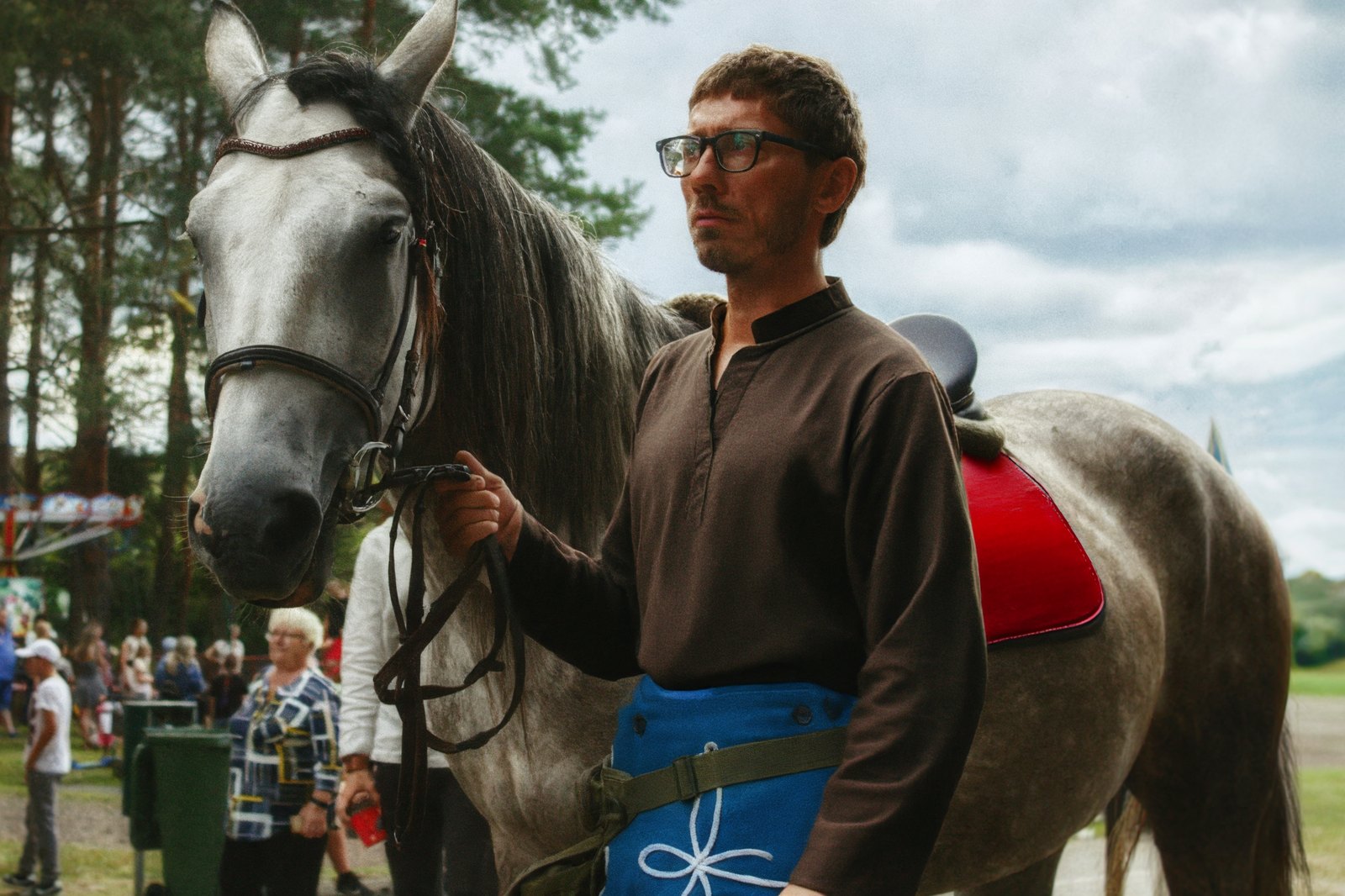
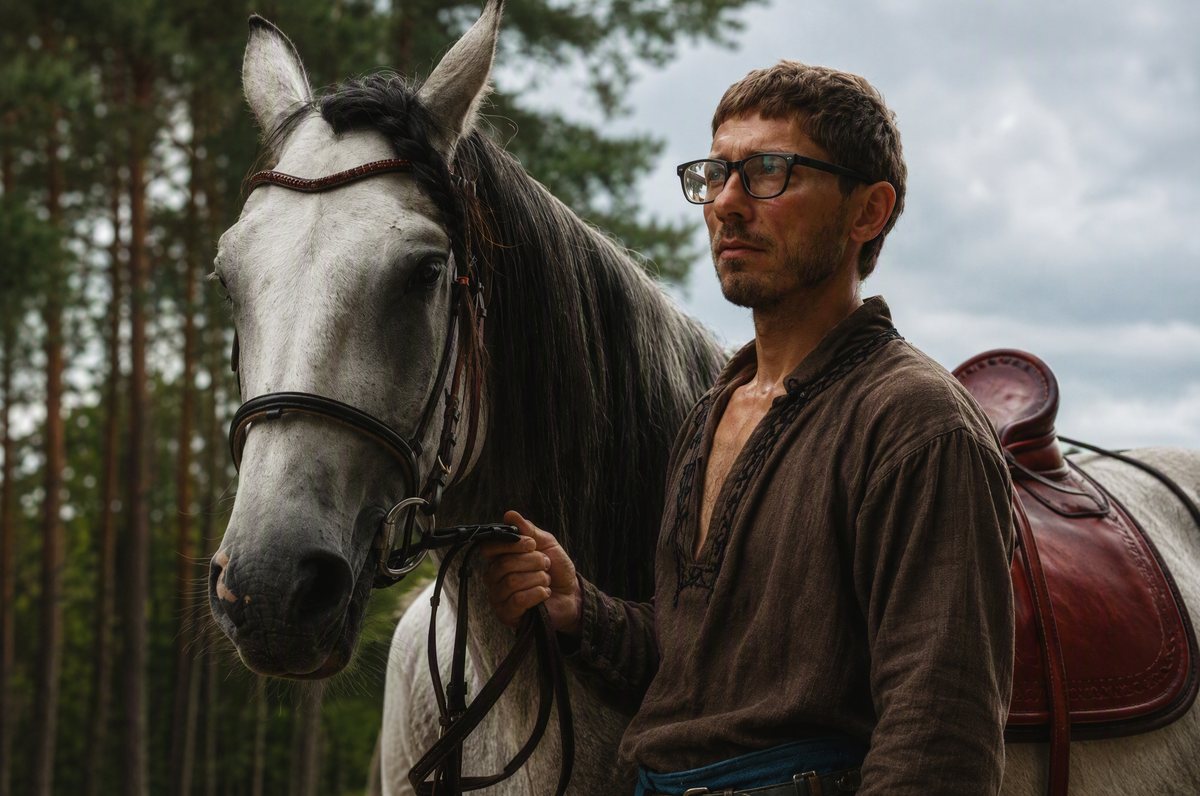
| Input, 1K editor framing | Output after a four-operation compound edit |
Official demo: zoom in on the man and horse, change the white shirt to a dark brown tunic, and swap the saddle pad for red leather, all in one instruction.
An update, not a first release
The repository already held an earlier SFT checkpoint (ckpt800). On 2026-11-03 it was replaced by ckpt35, the SATP-distilled transformer, which the model card labels an intermediate checkpoint without the later post-training stage.
The diff is narrow and checkable: all ten transformer shards were re-uploaded, while the text encoder (five shards), the DCAE-F64 VAE weights and the tokenizer are byte-identical to the previous revision. Transformer total_size is unchanged at 36,314,324,992 bytes and the tensor count stays at 233, so nothing in the architecture or loading path moved. HF's file index lists 9,078,581,248 parameters stored in fp32.
| Part | Change in the 11-03 revision |
|---|---|
| Transformer (10 shards) | Replaced |
| Text encoder, VAE, tokenizer | Byte-identical |
| Config, index, scheduler | Metadata only |
Turning a 1K editor into a 4K one
The hard part of 4K editing is not the sampler, it is the token count: a 4K latent at the usual f=8 compression is sixteen times the spatial area of 1K. BluePixel swaps FLUX.2 Klein's f=8 VAE for DCAE-F64, a deep-compression autoencoder that keeps the 4K DiT token count at the 1K level, then aligns the new latents with the pretrained editor through progressive projection distillation at 8 → 32 → 64.
The team puts the cost of that stage at roughly 4 days on 32 Kunlunxin P800 XPUs with about 200K samples, which is the argument the paper makes: 4K editing becomes a system problem with an affordable recipe rather than a from-scratch pretraining run.
Long-tail skills without forgetting the base
Group-by-group continual learning: each vertical skill (hairstyles, expression, pose, global photo effects) is taught as an ACE-LoRA bank on top of orthogonal gradients, then distilled back into the base model with MOPD before the next group starts. The paper reports CIE-Bench total 6.24 → 8.87 while general editing metrics move less than ±0.03, and the hairstyle bank alone carries 26 templates learned from a few dozen samples each.
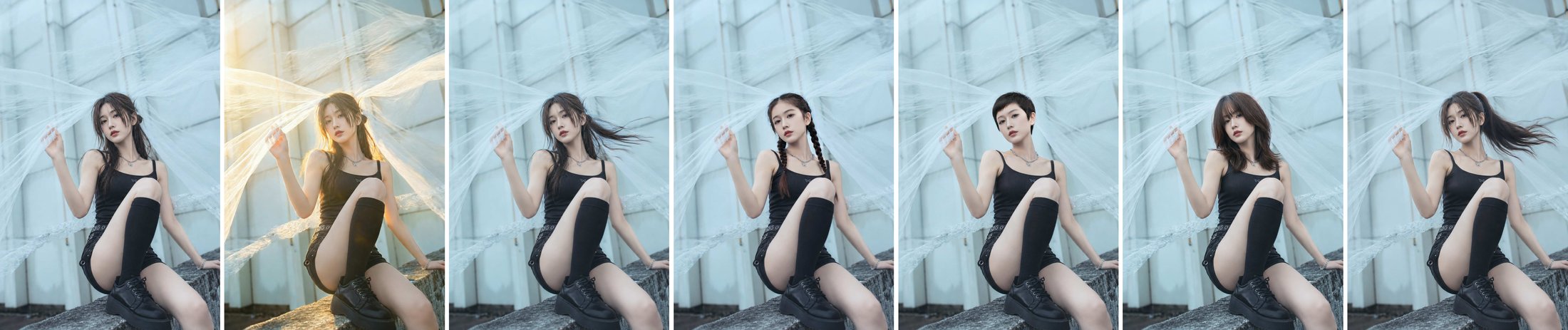
Template strips from the paper: source image on the left of each group, template outputs after it.
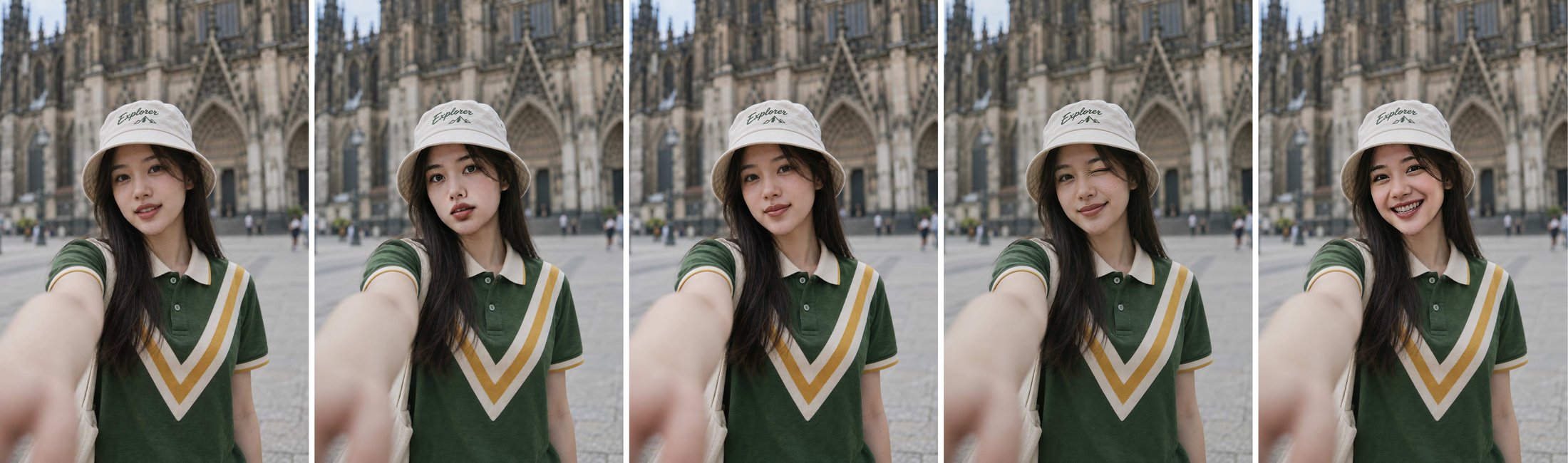
The expression group of the same bank, also distilled back into the base before the next group is trained.
Four steps instead of fifty
Source-anchored target projection (SATP) is the distillation scheme behind the Turbo name: the student is anchored to the source latent so that non-edited regions survive the step cut. The claimed result is a 50 → 4 step reduction, about 4x faster inference, with task success rate and background consistency held. The 8.7 s figure is measured on Kunlunxin P800 XPU hardware, so a CUDA desktop run will not land on it.
Benchmarks
Numbers below are from the project page; the page notes it does not assign each quality score to this specific Turbo checkpoint.
- VINS-4KEval++ (3,305 native-4K cases, 7 models): overall 8.62, 2nd of 7; non-edited-region consistency 9.06, 2nd only to GPT Image 2
- ImgEdit-Bench: 4.59 Hybrid and 4.93 Action, 1st in both; tied 1st on Add
- 8-seed stability: mean 8.624, span 0.053
- CIE-Bench: 6.24 → 8.87 through ACE-MOPD
 |
|---|
| GPT Image 2, same input and same compound instruction, from the project page comparison |
Availability
The official path is the Diffusers-based pipeline in vivo/BluePixel (load_pipeline + vins_infer.py, 4 steps, guidance_scale 3.0, target_pixels 4096×4096). There is no native ComfyUI loader in core yet, so ComfyUI access comes from a community pack: T8mars/Comfyui-BluePixel-T8, listed on the Comfy Registry as bluepixel-t8, with 20 nodes, split loader for the diffusion model / Qwen3-8B text encoder / DCAE-F64 VAE, and an INT8 ConvRot repack of the transformer in t8star/BluePixel-Comfy (about 28.19 GB across three files).
One constraint travels with the pack: DCAE-F64 compresses at 64x, so it cannot be mixed with a regular FLUX.2 VAE or an empty latent built for it. The pack targets ComfyUI 0.43.0+ and Diffusers 0.40+.
- Weights: openvivo/BluePixel-Turbo
- Code: vivo/BluePixel
- Paper: arXiv:2610.19882
- Dataset: openvivo/VINS-120K
Comments
Sign in with GitHub to join the discussion.