Pika H3 Flex Turns MiniMax H3 Into a Six-Step ComfyUI LoRA
Pika post-trained MiniMax H3 into Pika H3 Flex, a six-step model shipped as two ComfyUI LoRAs with three official templates and 12-reference control.
Pika H3 Flex is Pika's post-trained take on MiniMax H3: the same 33B omni model, retrained on an in-house audio-video corpus, distilled from a 50-step teacher down to six sampling steps, then refined with reward learning and preference optimization. Pika published the weights on Hugging Face, open-sourced the inference package on GitHub, and shipped a technical write-up alongside the launch post on October 29, 2026.
For ComfyUI the important part is that Flex is not a new architecture. It arrives as two LoRA adapters in native MiniMax H3 module layout, so it loads through the stock LoraLoaderModelOnly node on top of the H3 base you already have, with three official template workflows in the template library.
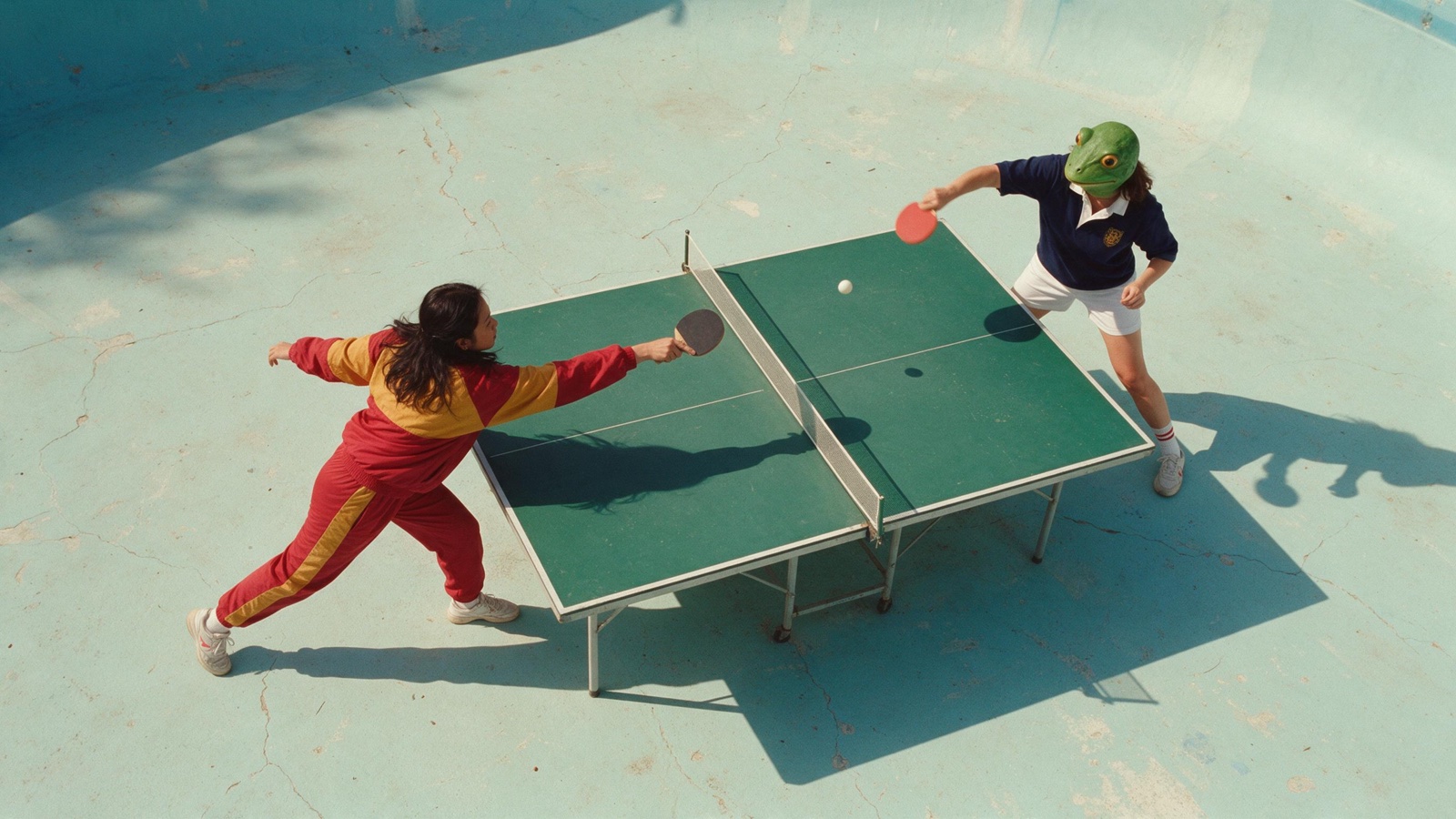 | 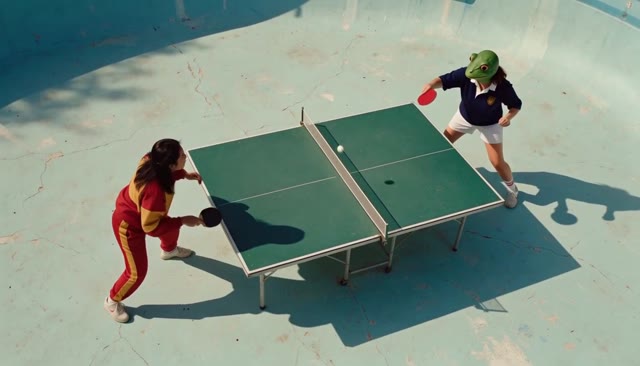 |
|---|---|
| First-frame reference | One frame of the six-step output |
The table-tennis demo: one still goes in, and the prompt asks for five scripted camera moves (overhead, crane down, whip pans, a 180 degree orbit, a low dolly) inside a 15-second take. Source: Pika H3 Flex model card
The full camera-rally clip with its generated soundtrack, taken from Pika's showcase set in the model repository.
Two adapters, one six-step schedule
Flex splits H3's two conditioning paths into separate adapters, matching the base model's own split:
| Adapter | Conditions on | Tasks |
|---|---|---|
| FL2VA | text, plus optional first and/or last frame | text to video (T2V), first frame (I2V), last frame, first and last frame |
| Ref2VA | text, plus ordered image, video and audio references | reference to video, motion transfer, character swap, reference-guided editing |
Ref2VA accepts up to 9 images, 3 videos and 3 standalone audio clips, with 12 reference files in total, and at least one image or video is required. Each reference video or standalone audio clip must run 2 to 15 seconds, with each of those two groups capped at 15 seconds combined. A video's own soundtrack stays attached to that video and does not count as an extra audio file.
Output is 480p or 768p natively across 11 aspect ratios, at 24 fps, with 32 kHz stereo audio mixed into the file, for requested durations of 5 to 15 seconds. H3's frame grid rounds those up: a 5-second request returns 124 frames, a 15-second request returns 362.
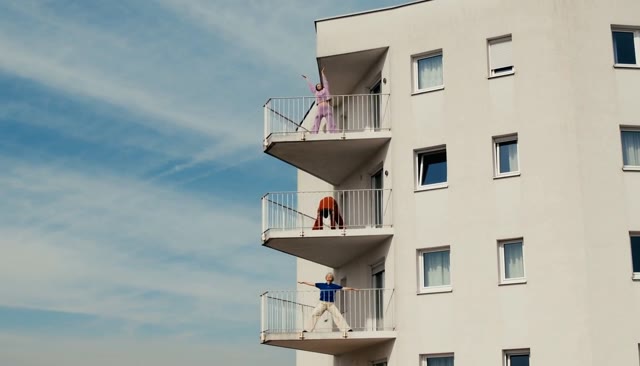
A single prompt drives three separately animated people on stacked balconies through an orbit, a push-in, a vertical boom and a reverse orbit, with no cuts.
The ComfyUI release
Three templates ship in the ComfyUI template library under Video: video_pika_h3_flex_t2v.json, video_pika_h3_flex_fl2va.json and video_pika_h3_flex_ref2va.json, all documented on the ComfyUI tutorial page. Each one pairs a pruned int8 H3 diffusion model with the matching adapter and runs Pika's published schedule: the LCM sampler with ManualSigmas and CFG 1.0 through BasicGuider, adapter strength fixed at 1.0.
Two details matter if you build your own graph instead of loading a template:
- The sigma grid is part of the checkpoint contract. Pika's manifest lists knots
1000/750/500/250/100/40/0, video shift 12, audio shift 3, and fresh intermediate noise. Picking six steps in a generic sampler does not reproduce that contract. - Do not stack a second acceleration LoRA. The adapter is already distilled to six steps, and the tutorial notes that adding a turbo or Lightning LoRA on top breaks the output.
The connectors are plain BF16 conversions rather than a new checkpoint: ordinary modules keep rank 128, while fused Q/K/V projections were merged to rank 384, and the conversion reorders SwiGLU halves to match the native H3 layout. Pika's own adapter readme is explicit that file integrity and tensor conversion were validated but that no end-to-end ComfyUI render was verified as part of the upload. Expect some drift from the reference inference package.
An early hands-on report from #pika-h3-flex-early fits that: tester NebSH chained a 6-step 960x544 pass into a latent upscale plus a 4-step 1920x1088 pass, landing a 2560x1440 result in 3 min 17 sec, while WAS flagged popping on high-frequency detail such as distant birds at four steps and suggested keeping six.
How Pika got to six steps
The technical deep dive describes three post-training stages on top of the released, guidance-distilled H3:
- Supervised fine-tuning on an in-house, aesthetically curated audio-video dataset spanning generation and editing tasks, still at the teacher's 50 steps.
- Projected Distribution Matching Distillation (PDMD, Wang et al. 2026) to cut sampling from 50 steps to six. Pika reports that standard DMD was unstable in their runs and that PDMD trained more reliably at better output quality.
- Post-distillation reward learning through ReFL (aesthetics and clarity) and DPO (instruction following, realism, visual quality), trained as two separate LoRAs and merged into one adapter so the combined behaviour costs no extra sampling steps.
A separate serving stack does the rest: cached timestep-dependent AdaLN projections, fused kernels, FlashAttention-4 and block-sparse attention with compressed communication. On eight B300 GPUs at 5-second 768p with audio, that took full inference from 3.409 s to 2.129 s, a 1.60x speedup, with the checkpoint and six-step schedule held fixed.
What the numbers say, and what they don't
Pika evaluated Flex against the official MiniMax H3, Fal H3 Max and HeyGen Video (quality) at 768p on the same prompt set, and reports the highest score on all five visual and audio quality metrics:
| Metric | Pika H3 Flex | MiniMax H3 | Fal H3 Max |
|---|---|---|---|
| Video technical | 12.3 | 11.7 | 10.6 |
| Video aesthetic | 5.41 | 5.28 | 5.00 |
| Audio aesthetic | 7.02 | 6.85 | 6.89 |
| Audio-video alignment | 0.212 | 0.208 | 0.216 |
Audio-video and text-video alignment land roughly level with the comparators, and the numbers are Pika's own evaluation. In their blind pairwise study, Flex leads on human anatomy, complex composition and audio synchronization for text and image conditioned generation, and on visual style, framing and camera motion for reference conditioned generation. Pika also states that the other systems stay preferred in physics, multi-scene narrative, lighting and materials, and action-heavy reference tasks.
Community A/Bs so far are small but consistent with a usable six-step model rather than a free lunch. Kijai ran the same T2V example prompt through DMAD and Flex at six steps each and reported that DMAD failed that case, while djbfilmz compared six-step Flex against a twenty-step run without the adapter and said he would iterate on Flex and do a full twenty-step render for finals. The tutorial's own claim is a 5-second 1344x768 clip in about a minute on a single card.
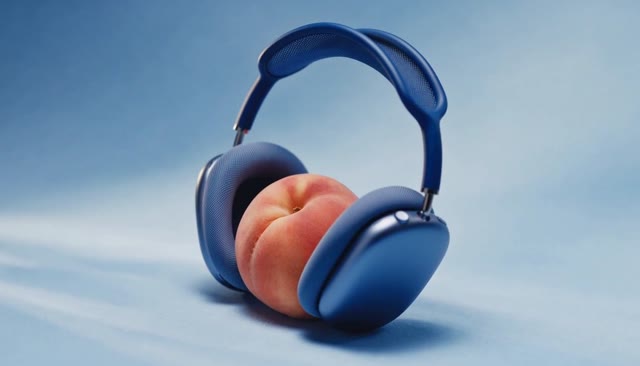 |  |
|---|---|
| Multi-shot product film | Character and environment references plus a motion clip |
Two more showcase cases: a nine-shot commercial from one product reference, and a motion transfer that takes choreography from a video while identity and style come from two still images.
Availability
The repository holds the two FP32 adapters (fl2va/adapter.safetensors, ref2va/adapter.safetensors, 2.77 GB each) for the Pika inference package, the BF16 ComfyUI conversions (1.96 GB each) under comfy/loras/, and Diffusers format H3 base components that Pika says total roughly 210 GB. Each ComfyUI template loads only the transformer partition it needs.
Pika's hosted extensions stay outside the download: 1080p, 2K and 4K upsampling from a 768p draft, five separated audio stems (dialogue, score, SFX, foley, ambience), prompt enhancement and the accelerated serving stack are all API features. Local open-weight inference covers 480p and 768p.
Comments
Sign in with GitHub to join the discussion.