Open-H3-Regenerate-2K: Open 4K Refinement for MiniMax H3
NVlabs Sana releases Open-H3-Regenerate-2K, an open refiner LoRA that redraws MiniMax H3 drafts at 2K and 4K in three denoising steps.
Open-H3-Regenerate-2K is the NVlabs Sana team's open stand-in for MiniMax's H3-Regenerate-2K stage, the second half of the H3 pipeline that redraws a finished 768P draft at higher resolution. The hosted version of that stage ships no weights, so the team rebuilt it as a single refiner LoRA on a frozen H3 transformer and video VAE, and published the weights on Hugging Face with code and a project page.
The refiner takes a draft at 384P, 512P, 576P or 768P and returns a native 768P, 1080P, 2K (2560x1440) or 4K (3840x2160) clip of 5 to 15 seconds, in three denoising steps rather than a full sampling run. By default it decodes through the 24-layer fast H3 VAE from StreamRender-H3 instead of the released decoder.
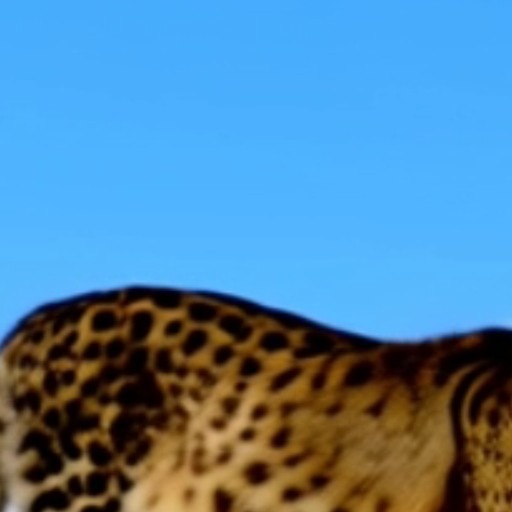 | 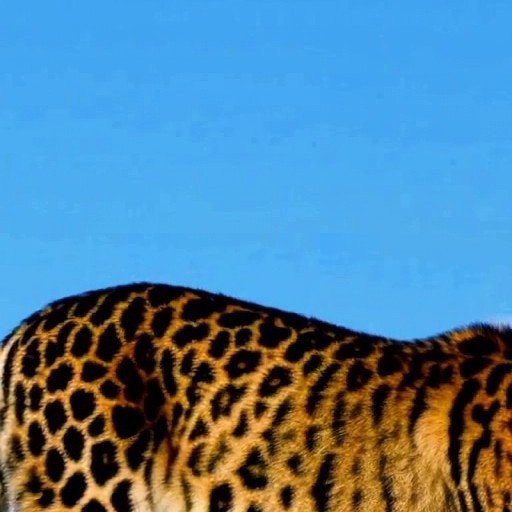 |
|---|---|
| Draft frame, same crop | Regenerated at 2K |
The same frame and the same window from the project's own comparison set, which pairs crops from the official H3-Regenerate-2K API with the open refiner. Source: project page
What the refiner replaces
H3 generates in two stages: the base model settles content and motion at low resolution, then a regeneration stage redraws faces, fabric, fur and foliage at full size. Only the first stage was released as weights in August; the second existed as a hosted API that accepts unmodified H3 768P output and returns 2K.
Open-H3-Regenerate-2K keeps the same split and opens the second stage. Input is not restricted to the H3 base model: the project demonstrates drafts made by LTX-2 and SANA-Video at 1024x576, and the refiner carries their layout, color and motion onto the larger grid.
How three steps do the work
The draft is encoded once, then a 3D-convolutional latent upscaler enlarges the latent straight onto the target grid, with no decode and re-encode in between. The enlarged latent is re-noised to sigma 0.909 and denoised in three Euler steps (0.909, 0.857, 0.667 to 0) with classifier-free guidance off, so each step is a single transformer call at full resolution.
Three adapters carry the few-step behaviour, and the release merges them into one file by concatenating their factors along the rank axis:
- the Open-H3 refiner itself, step 5000 EMA, rank 384
- LightX2V FL2VA Turbo v1.2, rank 128
- LMS Sharp v1.0, rank 64
The merged LoRA is rank 576 across 312 linear layers, stored in FP32 alongside the Sharp timestep-curve branches, which are kept as separate modules because they read an 8-D curve instead of the layer input. The project's merge check reports the merged delta matching the three separate adapters to a relative error of 2.2e-8.
Speed and benchmarks
The team measured one 5-second clip on a single B200, 768P latent to 2560x1440, warm, median of three runs. Latent upscale, three refine steps and VAE decode took 22.45 seconds with the SoL-Engine forward and the fast VAE decoder, against 87.26 seconds for the standard diffusers forward with the released decoder. Bypassing the decode and re-encode is where most of the win comes from: the fast decoder handles the 2K clip in 1.58 seconds instead of about 15.
On RefinerBench-150, with both systems run at 2560x1440, the team reports higher scores than the official API on all three UniPercept axes and on VBench aesthetic quality, imaging quality and subject consistency. In a blinded study of 200 judgments, the open refiner was preferred in 87%.
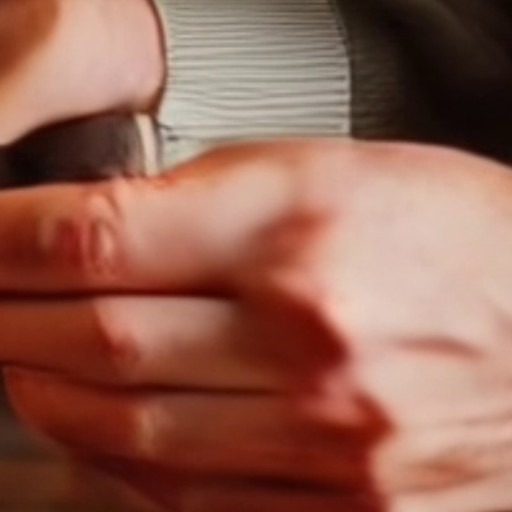 | 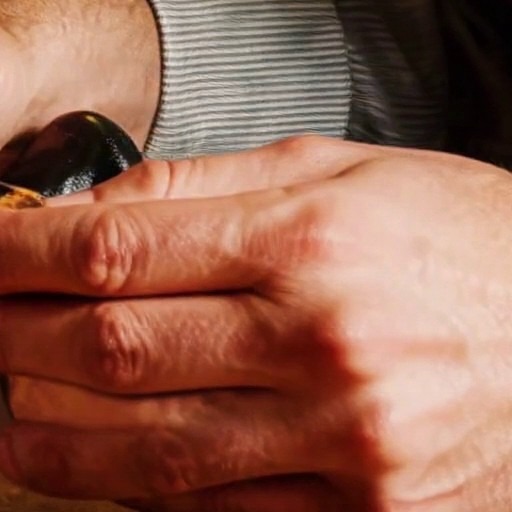 |
|---|---|
| Draft frame, second scene | Regenerated at 2K |
A second crop pair from the same comparison set. Source: project page
Availability
There are no official ComfyUI nodes for the refiner. The reference implementation is a Python CLI in the Sana repository (Linux, Python 3.11, PyTorch 2.11 with CUDA 13.0), and the download.py helper pulls the weights, the merged LoRA, the latent upsampler and the fast VAE decoder.
ComfyUI users have ported it themselves: Kijai published the refiner on its own as a rank-384 LoRA so it can be paired with other distills, and community conversions of the full adapted LoRA are on Hugging Face (father558, DrakenZA). The converters note that a straight conversion reproduces wrong weights because the Diffusers layout needs a SwiGLU transformation, so conversions made without that step will look broken.
The repository lists the refiner LoRA, the fast VAE decoder (1.62B parameters) and an unmodified copy of the H3 Diffusers components, so the whole 768P-to-2K path can run without the MiniMax API.
Comments
Sign in with GitHub to join the discussion.