MiniMax H3 Gets a VBVR LoRA for Motion and Object Consistency
Licon VBVR is an image-to-video LoRA for MiniMax H3 trained on VBVR video reasoning data, aimed at object duplication, clipping and broken action order. Loads in ComfyUI.
Licon VBVR is an image-to-video LoRA for MiniMax H3, published by Licon Studio on October 23 (Hugging Face). The adapter is trained on VBVR data reprocessed for H3, and it targets the failure modes that show up when a clip has to hold several objects over time: unintended copies of the same object, bodies clipping through props, and actions that happen in the wrong order.

Frames from the project's own validation clip. Source: Licon VBVR
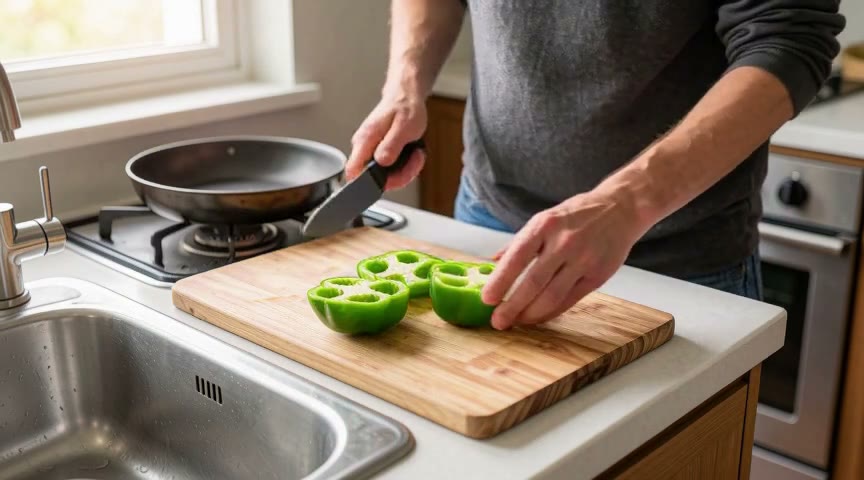
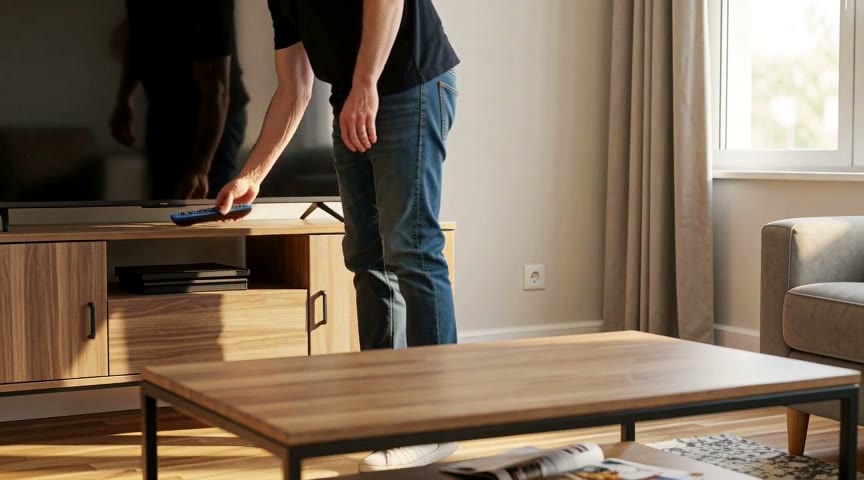
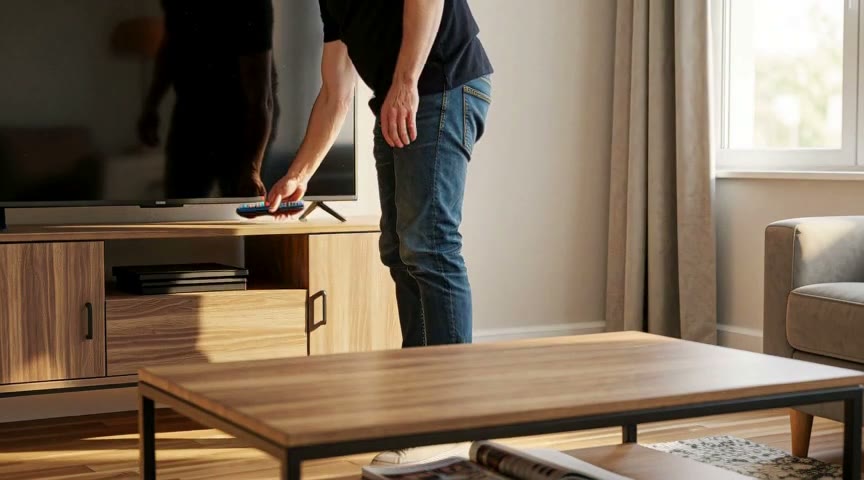
The release ships six validation cases, each with the first-frame input, the exact prompt and a side-by-side pair rendered from the same seed with and without the LoRA. The two below are 864x480, 384 frames long, 12.25 seconds each.
 |  |
|---|---|
| Kitchen scene, base H3 | Kitchen scene, H3 plus VBVR |
 |  |
|---|---|
| Living room scene, base H3 | Living room scene, H3 plus VBVR |
The kitchen case asks the model to rinse one green bell pepper, cut it into pieces and move them into a pan, keeping the same pieces through the sequence. The living room case asks for two moves in a stated order: the magazine to the lower shelf first, then the blue remote beside the television, with every other object left where it was. Both prompts describe the action step by step and forbid extra objects, which is the kind of instruction the LoRA is meant to actually follow.
Base MiniMax H3 on the kitchen prompt.
The same prompt and seed with the VBVR LoRA loaded.
What VBVR adds to the LoRA
VBVR (A Very Big Video Reasoning Suite) is a video reasoning dataset line: clips built around a verifiable task, such as tracking an object through occlusion, ordering objects by a rule, or continuing a shape sequence, with the prompt describing the task precisely. The public SFT split (VBVR-Pro-SFT-Video) is a large set of such clips, and the training code and benchmark are separate projects.
The author rebuilt that data around H3's own pipeline, adapting the preparation and preprocessing to how H3 trains, rather than training on another model's format. The LoRA header records 434,894 training items over 7,000 steps at 1280x720, rank 16, learning rate 5e-05 with cosine decay, and targets only four projections per block: attn.qkv_proj, attn.out_proj, mlp.fc1 and mlp.fc2. Supervision is video only, with the audio loss weight set to zero, so the LoRA does not touch the audio branch H3 generates alongside the frames.
The adapter is 149 MB, which is small for H3 and consistent with the rank-16 build. Its training metadata names minimax_h3_fl2va_bf16.safetensors as the base checkpoint, so it belongs on the FL2VA base rather than the T2VA one.
Using it in ComfyUI
Nothing has to be installed for it. Put H3-Licon-VBVR-I2V.safetensors in ComfyUI/models/loras/ and pick it in the LoraLoaderModelOnly node of an H3 image-to-video workflow.
The file uses kohya naming (lora_unet_blocks_0_attn_qkv_proj.lora_up.weight and so on), which ComfyUI's stock LoRA loader maps onto the H3 block names directly, so no conversion script or custom node is needed. The project does not publish a workflow JSON; any existing H3 first-frame workflow works, and the LoRA is applied as a plain model patch.
Limits
The comparisons are qualitative and come from the author. There is no benchmark table and no ablation over LoRA strength, so how far the effect holds at lower strength is not documented. The six validation clips are all 864x480 photo-real indoor scenes with one or two manipulated objects, which is narrower than the task mix in the training set. As with any H3 LoRA, the audio branch is untouched, so the sound is whatever the base model produces.
Availability
The LoRA is on Hugging Face together with all six validation pairs and their prompts. The same lab previously published the LTX-2.3 VBVR LoRA and a ComfyUI-ready Wan 2.2 VBVR build, and earlier this year released the MSR-v2 multi-subject reference LoRA covered in Licon MSR-v2.
Comments
Sign in with GitHub to join the discussion.