MiniMax H3 FaceSwap LoRA Replaces the Actor in Any Reference Video
UntMods' FaceSwap LoRA for MiniMax H3 Ref2VA swaps the identity in a reference video for the face in your reference image, with a ready ComfyUI workflow.
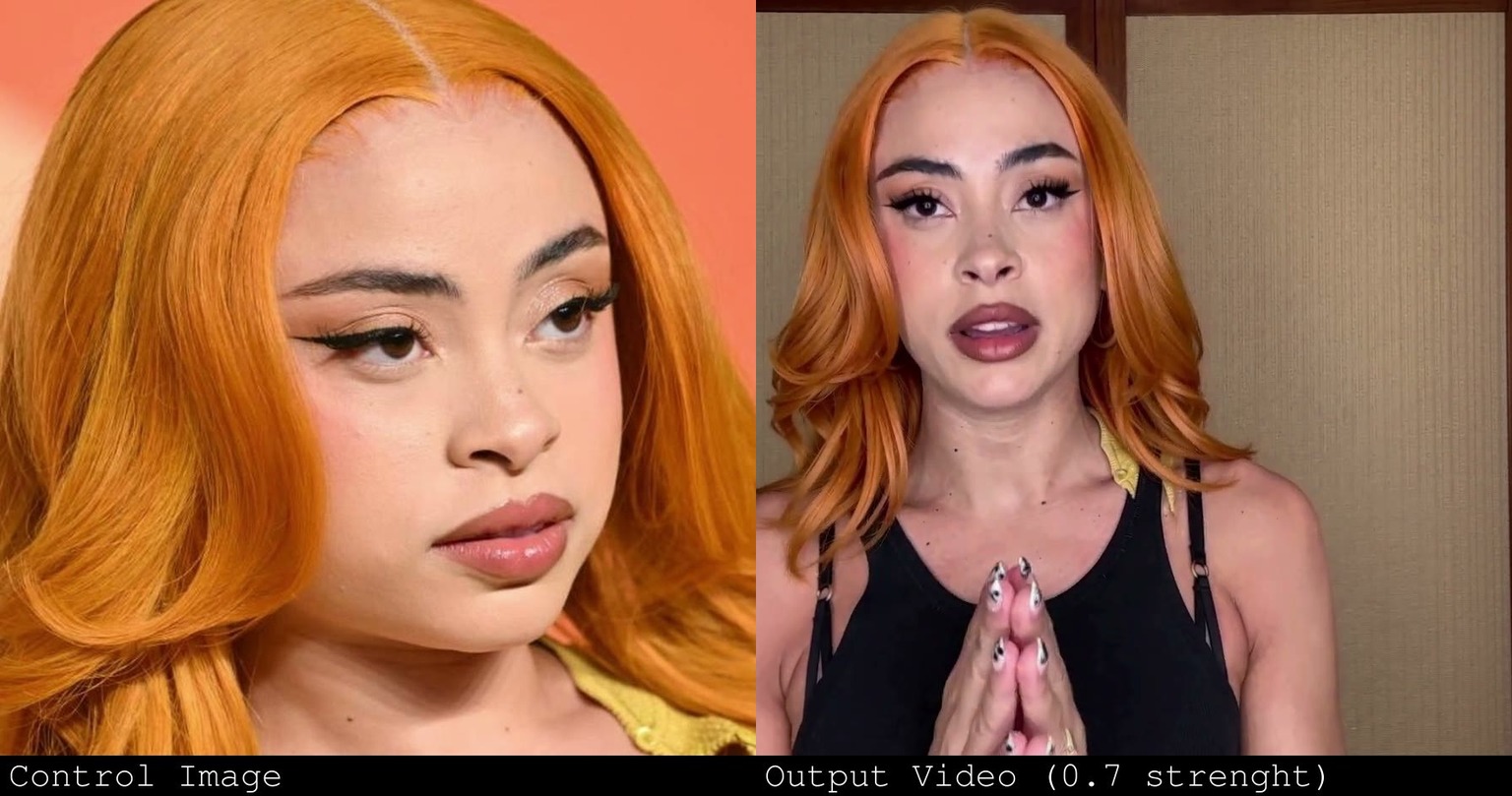
Left: the control image that supplies the new identity. Right: a frame from the output clip generated with it.
What the LoRA changes
Face replacement on MiniMax H3 usually means forcing the whole reference-image stack away from its trained behaviour: the ref2va variant already accepts reference images, but it uses them to steer appearance, clothing and scene rather than to overwrite the actor. This adapter narrows that job down to the face. You feed the clip you want to keep and one or more reference images of the new identity, and a single trigger word, Faceswap, tells the sampler when to apply the swap.
Practical details from the model card:
- Trained for
ref2va. It applies on top of the reference-to-video-and-audio H3 weights, not thefl2vabranch. - One trigger word,
Faceswap, with strength 1.0. - Pruned adapter. Blocks under the author's threshold are dropped from the safetensors file, which keeps the download at 63 MB and, in the author's words, means "less LoRA artifacts, identical strength to trained base".
- Multiple references allowed. The shipped workflow carries three reference-image loaders and notes the node "works with single or multiple Refs Images".
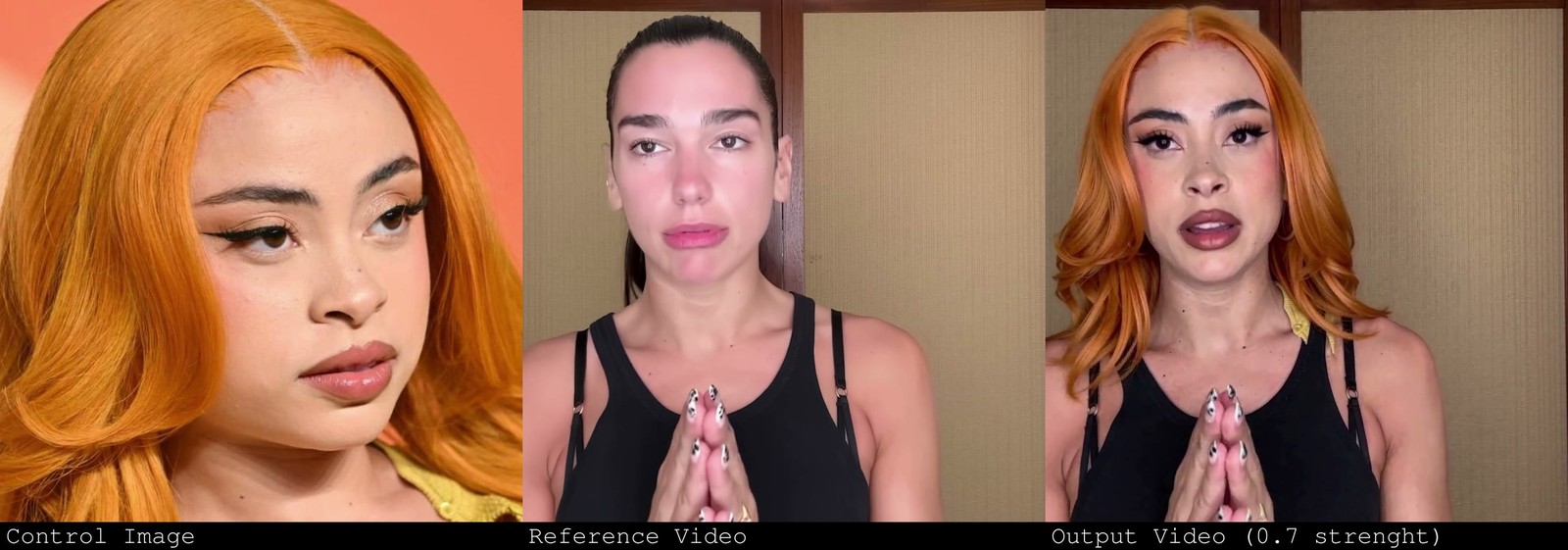
The published demo clips are three-panel comparisons with the labels burned in: control image on the left, reference video in the middle, swapped output on the right.
Running it in ComfyUI
The repo ships SS_FaceSwap_MiniMax REF2V.json, a frontend-format workflow built on the author's own CRT-Nodes pack plus ComfyUI-VideoHelperSuite for loading and muxing video:
- Install
CRT-Nodes(available in ComfyUI Manager asCRT-Nodes) andComfyUI-VideoHelperSuite, then restart ComfyUI. - Download
SS_FaceSwap_MiniMax_H3_REF2VA.safetensorsfrom the model repo intoComfyUI/models/loras/MiniMaxH3/SS_FaceSwap/, which is the path the workflow expects. - Open the workflow, load your source clip in the VHS video loader and your new identity into the reference-image loaders, and put
Faceswapin the prompt.
The sample workflow wires the LoRA through LoraLoaderModelOnly at strength 1.0 next to a second slot holding an 8-step Ref2VA turbo LoRA, so the demo clips render at accelerated step counts. Its sampler is the CRT MiniMaxH3UnifiedSampler in R2V mode using the pack's "Balanced (recommended)" preset; the comparison clips published with the model are labelled 0.7 strength. The checkpoint, text encoder and VAE slots point at the pruned int8 convrot ref2va base, the nvfp4 Qwen3-VL 32B text encoder and H3's separate int8 video and fp32 audio VAEs.
The trigger word is only half of the conditioning: the adapter is trained to take identity from the reference images, so the clip's own subject keeps the motion, timing, framing and audio while the face is replaced.
Examples from the model card
The identity being transferred does not have to be human. In the second published comparison a black cat supplies the face and the result sits on the presenter in the source clip:

Control image on the left, reference video in the middle, output on the right.
Control image, reference video and output at 0.7 strength, with the audio kept from the source clip.
The same pipeline used to move a cat's identity onto a studio presenter.
Availability
- Model card and weights: UntMods/FaceSwap_MiniMaxH3_REF2VA
- Workflow JSON:
SS_FaceSwap_MiniMax REF2V.json - Node pack: PGCRT/CRT-Nodes
The link was shared in Banodoco's #minimax_h3_chatter on September 19, and the model card has collected over 55 likes in its first days. The published demos are the trainer's own clips; no third-party test results had surfaced at the time of writing.
Comments
Sign in with GitHub to join the discussion.